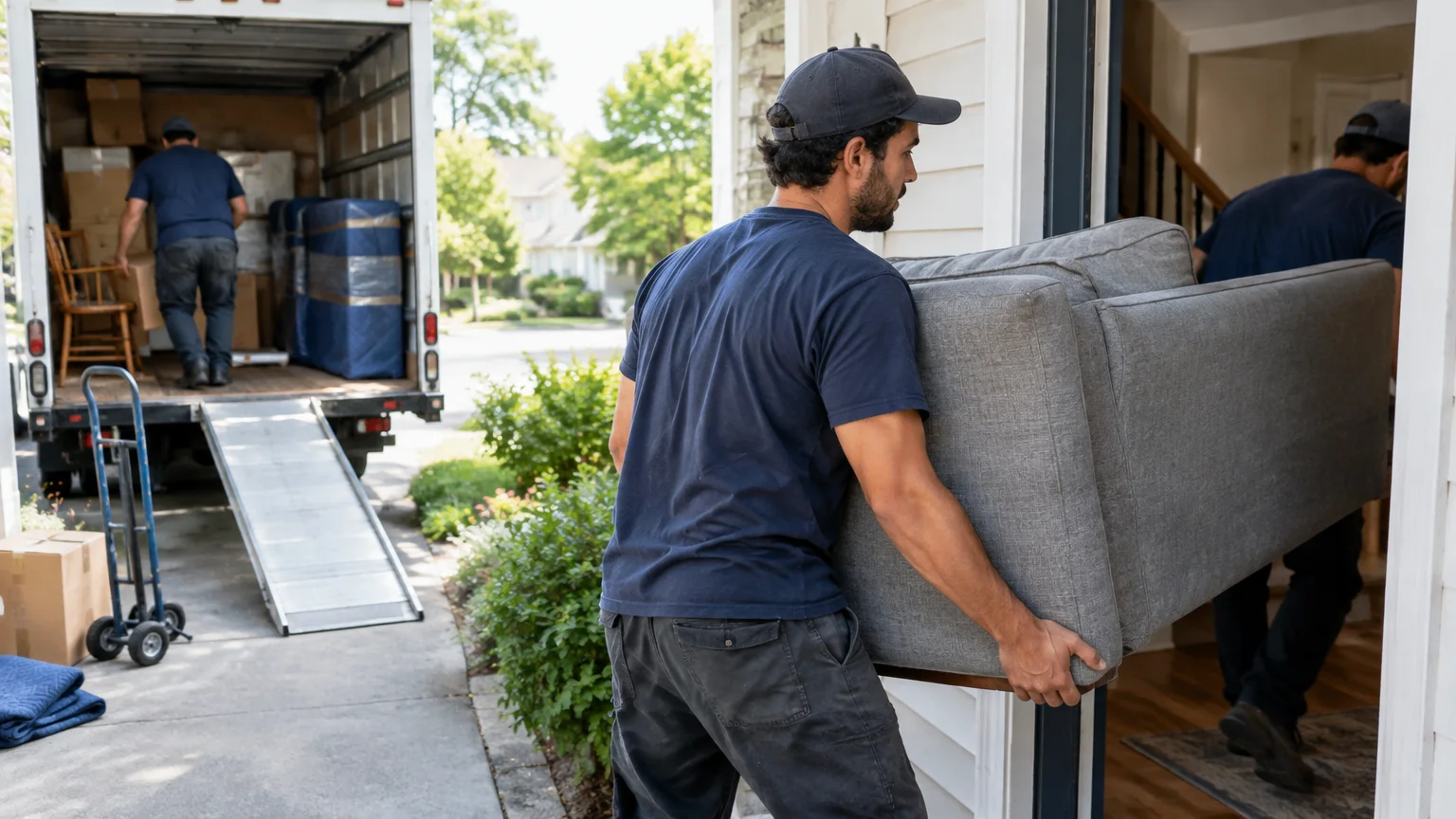
Moving how to starts with a clear plan before anyone lifts. Measure the furniture and every tight space. Empty and wrap each item, then clear a safe path through the home. This guide covers heavy couches, dressers, mattresses, fish tanks, and other large items in Youngstown.
A rushed move can damage a wall or hurt your back. A good plan checks the item, route, tools, and people involved. It also helps you know when to stop and ask for help.
How do you prepare heavy furniture for moving?
Heavy furniture is easier to move when it is empty, wrapped, and ready to turn. Check each item before gathering helpers. Measure tight spaces first so the piece does not get stuck in a doorway or hall.
What should you measure before moving furniture?
Measure the furniture at its widest, tallest, and deepest points. Include legs, handles, knobs, hinges, and parts that cannot come off. Then measure doors, halls, stair landings, elevators, gates, and the space around sharp corners.
The smallest opening controls the move. A couch may fit through a door on its side but fail at the landing. A bookcase may need to move flat. A mattress may bend through a narrow hall, but only if its design allows it. Check the ceiling height and overhead lights, too.
Mark the route from the current room to the truck or next room. Remove rugs, plants, small tables, wall art, and loose items. Keep children and pets away from the path. For an office move, label desks, cabinets, and equipment before lifting begins.
Which tools and protective materials do you need?
Useful supplies include moving blankets, stretch wrap, corner guards, floor runners, gloves, a furniture dolly, lifting straps, and strong tape. A furniture dolly is a small wheeled platform for moving heavy items across level floors. It helps, but it does not replace good control.
Protect wood, glass, painted walls, floors, and metal edges before lifting. Wrap drawers on their own when possible. Secure doors so they cannot swing open. Glass shelves, mirrors, and aquarium parts need thick padding and a firm box or crate. Empty a fish tank fully, and carry it by its frame only when the maker allows it.
A moving checklist keeps each task in order. Youngstown Movers can help people choose safe DIY steps or professional Furniture Movers when an item is too large, fragile, or hard to control.
How do you move heavy furniture through narrow spaces?
Move heavy furniture through a narrow space only after testing the route. The team should know which end leads, where hands will go, and where the item can rest. Slow movement gives everyone time to stop before a wall, door, or person gets hurt.
How can you plan the safest route?
Start at the final spot and work backward. Open every door along the route. Remove a door from its hinges only if it blocks the opening and the homeowner can do so safely. Cover door frames and corners with blankets or pads.
Plan safe rest points along the way. These are places where the team can set down the item without trapping hands or blocking an exit. Check for steps, wet floors, loose boards, low ceilings, and narrow turns. In an apartment, check elevator rules and reserve the elevator when needed.
Choose one person to lead the move. The leader gives commands and watches the route. Everyone else repeats the command before moving. No one should pull from a spot where a slip could trap a hand or foot.
What techniques help furniture clear doorways and corners?
Many couches and cabinets are easier to move when tilted upright. This method is often called the pivot method. The team lifts one end, turns the item slowly, and keeps the other end clear of walls and floors.
Do not drag heavy furniture across bare floors. Dragging can scratch the floor and make the load hard to control. If the item must slide a short way, use a proper moving pad or slider that fits the floor and furniture weight.
Remove legs, shelves, doors, or drawers when the design allows it. Smaller parts are easier to carry and less likely to catch on a corner. A couch may need its feet removed. A dresser may need its drawers taken out and carried separately. Bend a mattress only when its construction allows it.
Youngstown Movers serves the main Youngstown area, including West Side, South Side, Boardman, Austintown, Girard, Hubbard, and nearby communities. The team can help with tight entries, heavy pieces, and careful room-to-room moves. Professional movers can also bring the right tools when a doorway leaves little space for error.
How do you move heavy furniture upstairs or downstairs?
Stairs make heavy furniture more dangerous. The load can shift, and helpers have less room to step. A safe plan uses enough people, clear commands, firm footing, and tools made for the task. One person should not carry a large item on stairs alone.
How should you coordinate a two-person or team lift?
Before lifting, agree on who leads, where each person stands, and where the item can rest. The leader gives commands such as lift, lower, stop, and turn. Everyone should wait for the leader before changing direction.
Lift with your legs and keep your back steady. Hold the item close to your body, and do not twist while carrying. The person on the lower side may carry more of the load. Plan for that before starting. Take short breaks at planned rest points instead of stopping without warning.
On stairs, keep the item balanced. Do not block the view of the person walking backward. A spotter can watch the next step and keep the path clear. Never place fingers under an item while lowering it. Set it down with control instead of dropping one end.
When should you use a furniture dolly, lifting straps, or a ramp?
A dolly works well on smooth, level surfaces and some safe ramps. It can be risky on stairs unless it is made for stair use and handled by trained people. Lifting straps may spread the weight, but they can shift the balance when placed poorly.
A ramp needs a firm surface, a safe slope, and enough room to control the load. Loose boards, cardboard, and damaged ramps can slide or break. Check every tool before use and follow the maker’s directions.
Special items need extra care. Pianos, large safes, commercial machines, and filled or damaged aquariums can shift in ways that normal tools cannot control. For these items, professional Furniture Movers or Loading & Unloading Help may be safer than a DIY lift.
When should you stop moving heavy furniture yourself?
Stop when the item cannot stay under control during the full move. Pain, fear, poor footing, tight turns, weak tools, and too few helpers are warning signs. Stopping early is safer than trying to finish after the plan fails.
What warning signs indicate a move is unsafe?
The move should pause if any of these signs appear:
- The team cannot lift and lower the furniture smoothly.
- The route has stairs, sharp turns, wet floors, or weak surfaces.
- The item blocks the carrier’s view or shifts when tilted.
- A doorway, ceiling, or landing leaves no safe place to turn.
- Someone feels pain, numbness, dizziness, or a weak grip.
- The right dolly, straps, padding, or safety gear is missing.
A damaged wall or stuck item is also a reason to stop. Never force furniture through an opening. It may need to be taken apart, moved along another route, or handled by a professional crew.
How can professional movers reduce damage, injury, and downtime?
Professional movers plan the route, bring suitable tools, and use trained lifting methods. They can protect floors and walls, handle stairs, and move bulky items through tight spaces. This can prevent long delays at home. For a business, it can help limit downtime during an office change.
A homeowner may safely handle light packing, labeling, clearing paths, and simple furniture assembly. Heavy lifting, specialty items, narrow stairs, and uncertain routes need more care. Youngstown Movers can help Youngstown residents decide if a DIY plan is safe or if Local Movers, Apartment Movers, or Commercial & Office Movers fit the job.
Frequently Asked Questions
How can one person move a couch safely?
One person should not move a large couch alone if it must be lifted, tilted, or carried over steps. A solo mover can remove cushions and legs, clear the route, and use sliders on a level floor. Lifting, turning, and stairs need another person or professional movers.
How do you move a couch through a narrow door?
Measure the couch and opening first. Remove the legs and cushions when possible. Then tilt the couch upright and rotate it slowly through the doorway. Protect the frame and door trim. If the couch still cannot clear the turn, stop instead of forcing it.
How should someone move a mattress?
Cover the mattress, keep it clean, and use at least two people for a large or heavy one. Use a mattress bag and strong handles when available. Avoid sharp bends unless the maker allows them. Keep the mattress away from wet ground and secure it so it cannot slide.
When should a mover hire professional help?
Professional help makes sense when an item is heavy, fragile, valuable, or hard to control. Stairs, tight landings, long carries, weak flooring, and limited helpers also raise the risk. The final cost is confirmed on a quote after the item, access, protection needs, and urgency are reviewed.
Key takeaways
- Measure the furniture and full route before lifting.
- Clear, pad, and protect every part of the path.
- Use one leader and simple commands during team lifts.
- Do not use a dolly, strap, or ramp beyond its safe purpose.
- Stop when the load, route, or team cannot stay under control.
Conclusion
Moving heavy furniture safely depends more on planning than muscle. Measuring first, protecting the home, and using the right method can prevent many common problems. Some items and routes are not safe DIY jobs.
For careful moving help in the Youngstown area, Contact us to request a quote from Youngstown Movers.
If you are not sure what you are dealing with, it is worth having someone look at it before it turns into a bigger job. Get in touch with Youngstown Movers today and we will tell you where you stand.